
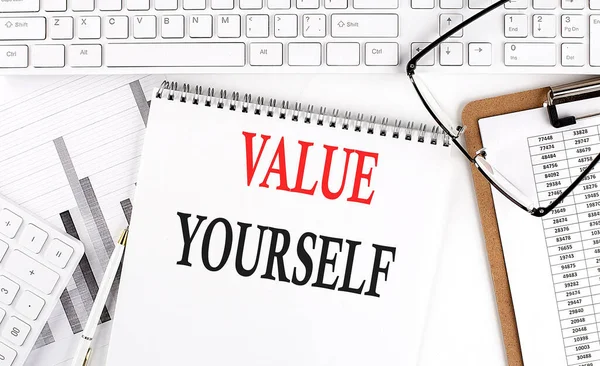
Self-value isn't arrogance or entitlement. It's the quiet confidence that comes from knowing who you are, what you deserve, and refusing to settle for less. It's the foundation upon which all achievement, fulfillment, and happiness are built. Without it, even the greatest external success feels hollow. With it, even the simplest life feels rich and meaningful.
The world treats you the way you treat yourself. This is the mirror principle, and it operates with remarkable consistency. When you don't value yourself, you send out signals—through your body language, your choices, your boundaries (or lack thereof), and your tolerance for mistreatment. People pick up on these signals, often unconsciously, and respond accordingly.
When you value yourself, everything changes. You carry yourself differently. You speak with conviction. You set boundaries without guilt. You pursue opportunities without apologizing for your ambition. And the world responds by treating you with the respect you've already given yourself.
Jennifer worked at a marketing firm for seven years, consistently producing excellent work but remaining in the same position while colleagues with less experience were promoted around her. She never asked for raises, volunteered for every thankless task, and apologized constantly—even when she wasn't at fault.
The turning point came during a performance review when her manager casually mentioned, "You're great, but you don't really act like someone who wants to move up." The comment stung, but it also awakened something in Jennifer. She realized she'd been treating herself as dispensable, so that's exactly how she was being treated.
Jennifer began a deliberate practice of self-valuation. She stopped apologizing unnecessarily. She documented her achievements. She declined projects that didn't align with her career goals. Most importantly, she scheduled a meeting with her manager and, for the first time, clearly articulated her value and her expectations for advancement.
The response surprised her. Within three months, she received a promotion and a 30% raise. Her manager later admitted, "We always knew you were talented, but we didn't realize you were serious about leadership until you started acting like a leader."
Jennifer didn't change her skills or her work quality—she changed how she valued herself. And once she did, she got exactly what she wanted.
Nowhere is self-value more critical than in relationships. The quality of your relationships—romantic, familial, professional, and social—is directly proportional to how much you value yourself. When you don't value yourself, you attract people who don't value you either. When you do value yourself, you naturally attract and maintain relationships with people who recognize and honor your worth.
David had a pattern of relationships that left him feeling drained, unappreciated, and questioning his worth. He dated people who were emotionally unavailable, critical, or outright disrespectful. Each relationship ended with him feeling like he wasn't good enough.
After his third painful breakup in five years, David's therapist asked him a simple question: "Do you believe you deserve to be treated well?" David's immediate response was, "Of course," but as he sat with the question, he realized his actions told a different story. He tolerated behavior he would never accept if it were directed at a friend. He ignored red flags. He made excuses for people who showed him, repeatedly, that they didn't value him.
David began working on self-value. He created a list of non-negotiables—behaviors and treatment he would no longer accept. He started therapy to address childhood wounds that had convinced him he had to earn love through sacrifice and tolerance. He spent time alone, learning to enjoy his own company and discovering what he actually wanted in a partner.
A year later, David met someone completely different from his previous partners. She was kind, communicative, and genuinely interested in his thoughts and feelings. The relationship felt easy in a way David had never experienced. When he mentioned this to his therapist, she smiled and said, "It's not that she's different. It's that you're different. You valued yourself, and you attracted someone who values you too."
Your career success is limited not by your talent or your circumstances, but by how much you value yourself. When you value yourself, you pursue opportunities that match your worth. You negotiate for fair compensation. You don't stay in positions that underutilize your abilities. You invest in your growth because you believe you're worth the investment.
Michael was a talented graphic designer working for a small company that paid him barely above minimum wage. He had a portfolio full of impressive work, but he never pursued better opportunities because he didn't believe he was "good enough" to work for prestigious firms or charge premium rates.
His wake-up call came when a friend hired him for a freelance project and insisted on paying him three times his hourly rate at his day job. "That's what designers with your skill level charge," his friend explained. Michael was shocked. He'd been undervaluing himself so severely that he didn't even know what his work was worth.
This revelation sparked a transformation. Michael researched industry standards, rebuilt his portfolio with confidence, and started applying to positions he'd previously thought were "out of his league." Within six months, he landed a position at a top agency with a salary four times what he'd been making.
But the story doesn't end there. Two years later, Michael started his own design studio. Because he valued himself and his work, he had no hesitation charging premium rates. His confidence attracted high-quality clients who respected his expertise and paid him accordingly. Today, his studio generates more revenue than he ever imagined possible—not because his skills suddenly improved, but because he finally valued them appropriately.
You teach people how to treat you by what you tolerate. When you value yourself, you set clear boundaries and enforce them without guilt. You say no to requests that drain you. You walk away from situations that diminish you.
People who value themselves invest in their development—through education, therapy, health, and experiences that enrich their lives. They don't wait for permission or perfect circumstances. They invest because they believe they're worth it.
Self-value means acknowledging your accomplishments instead of dismissing them. It means accepting compliments instead of deflecting them. It means recognizing your progress instead of fixating on how far you still have to go.
The way you talk to yourself matters. When you value yourself, you replace harsh self-criticism with constructive self-compassion. You treat yourself like someone you love, because you do.
Every choice is a statement about what you believe you deserve. When you value yourself, you choose the job that respects your time, the relationship that honors your heart, the friendships that uplift your spirit.
Rachel struggled with self-worth after a difficult divorce left her feeling rejected and inadequate. She began a simple daily practice: each morning, she wrote down three things she valued about herself, and each evening, she noted one decision she'd made that day that honored her worth.
At first, it felt forced and artificial. But over weeks and months, something shifted. Rachel noticed she was making different choices—declining invitations that felt obligatory rather than enjoyable, speaking up in meetings instead of staying silent, investing in a course she'd been interested in but thought was "too expensive."
Within a year, Rachel's life looked completely different. She'd been promoted at work, developed a circle of genuine friendships, and even started dating again—but this time, with clear standards and boundaries. When friends asked what had changed, Rachel's answer was simple: "I started valuing myself, and everything else followed."
Here's the beautiful paradox: once you truly value yourself, you stop desperately chasing what you want. You stop begging for opportunities, relationships, or recognition. You stop contorting yourself to fit into spaces that weren't designed for you. Instead, you become magnetic. You attract what you want because you've become the kind of person who naturally aligns with those things.
When you value yourself, you don't chase jobs—you evaluate whether they're worthy of your time and talent. You don't chase relationships—you assess whether people enhance or diminish your life. You don't chase validation—you provide it for yourself.
This doesn't mean you become passive or stop pursuing goals. It means you pursue them from a place of confidence rather than desperation, from abundance rather than scarcity.
Once you value yourself, you will get everything you want—not through magic, but through the natural consequences of self-respect. When you value yourself, you make better decisions. You set higher standards. You pursue worthy goals with confidence. You attract people and opportunities that match your worth. You persist through challenges because you believe you deserve success.
Self-value isn't the cherry on top of a successful life—it's the foundation. Without it, even great achievements feel empty. With it, even ordinary moments feel rich with meaning and possibility.
The question isn't whether you're valuable—you are, inherently and completely. The question is: do you recognize it? Do you honor it? Do you live like someone who knows their worth?
Once you do, everything changes. Not because the world suddenly becomes easier, but because you become stronger, clearer, and more aligned with what you truly deserve.